Fire Prevention Week: 5 Dryer Habits That Prevent Fires
Quick answer
Dryer fire prevention comes down to keeping lint out of places where heat can reach it and keeping air moving through the vent. Clean the lint screen every load, don’t run the dryer when nobody’s home or awake, use a metal duct, have the vent cleaned, and keep the area around the dryer clear. If loads start taking longer or the dryer feels hot, check the vent before the next load.
Fire Prevention Week runs October 4 to 10 this year, according to the National Fire Protection Association. It lands right as Northern Virginia homes shift to heavier fall laundry. The U.S. Fire Administration’s clothes dryer fire report found that home dryer fires were more common in fall and winter and peaked in January. Good dryer fire prevention habits are easiest to start now, before the busiest months.
Why lint is the real hazard
Lint is fine fiber from fabric, and it catches fire easily. Some of it always gets past the screen. It settles in the duct, the outside vent hood and inside the cabinet near the heat source. As it builds up, airflow drops, the dryer runs hotter and longer, and the lint sits closer to the heat. Every dryer fire prevention habit below either keeps lint from piling up or keeps air moving so heat can leave the dryer.
5 dryer fire prevention habits
1. Clean the lint screen before every load
You can fix this
Pull the screen out and wipe it off before you start the dryer, every time. The U.S. Fire Administration’s dryer safety tips also say never to run the dryer without the screen in place. If you use dryer sheets, wash the screen with warm soapy water every few months. A film can build up that you can’t see, and water pooling on the mesh instead of running through it is the sign.
2. Don’t run the dryer unattended or overnight
You can fix this
Start the dryer when someone will be awake and home until it finishes. Don’t start a load right before bed or as you head out the door. If something goes wrong, a person in the house notices smoke or a smell early, and a working smoke alarm near the laundry area helps them notice it sooner.
3. Use rigid or semi-rigid metal duct
Maybe a DIY fix
The duct from the dryer to the wall should be rigid metal or semi-rigid aluminum. White vinyl duct and thin foil accordion duct crush easily, trap lint in their ridges, and can burn. Keep the run as short and straight as your dryer’s installation guide allows, with no sag where lint can collect. Swapping a short transition duct is a common DIY job. Duct inside walls or ceilings is a job for a professional.
Dryer running hot or slow? Let us take a look.
We can usually be there the same day across Prince William and Fairfax counties. Use code FREECALL and the service call is free with your repair.
4. Have the vent cleaned and the outside flap checked
Call a technician
The lint screen can’t reach the duct run inside your walls. Woodland does dryer vent cleaning: we clean the full run from the dryer to the outside and check the hood. It matters most in homes where the dryer vents through the roof or a long run to an outside wall. At the outside hood, the flap should swing freely and close when the dryer stops. A screen or bird guard over the opening catches lint and should come off.
5. Keep the area around the dryer clear
You can fix this
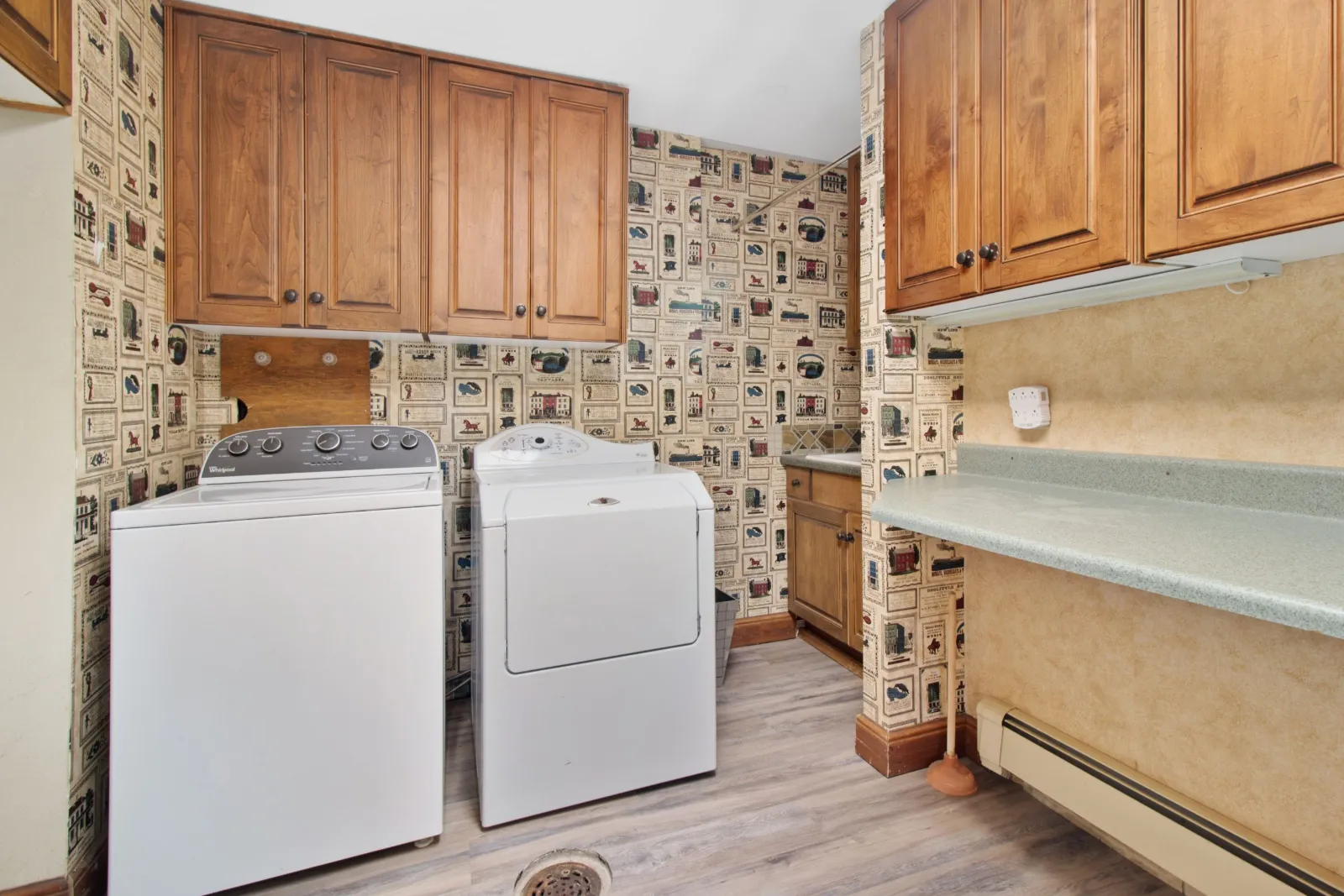
Don’t pile laundry, boxes, cleaning products or paint cans on top of or beside the dryer. Vacuum behind and under it a few times a year, since lint and dust collect there too. On a gas dryer, keep the floor near the gas line clear so nothing gets pushed against the connector when the dryer moves.
Dryer fire prevention warning signs to act on
These signs mean heat isn’t leaving the dryer the way it should. Our post on a dryer running but not heating covers the safety parts that trip when this happens.
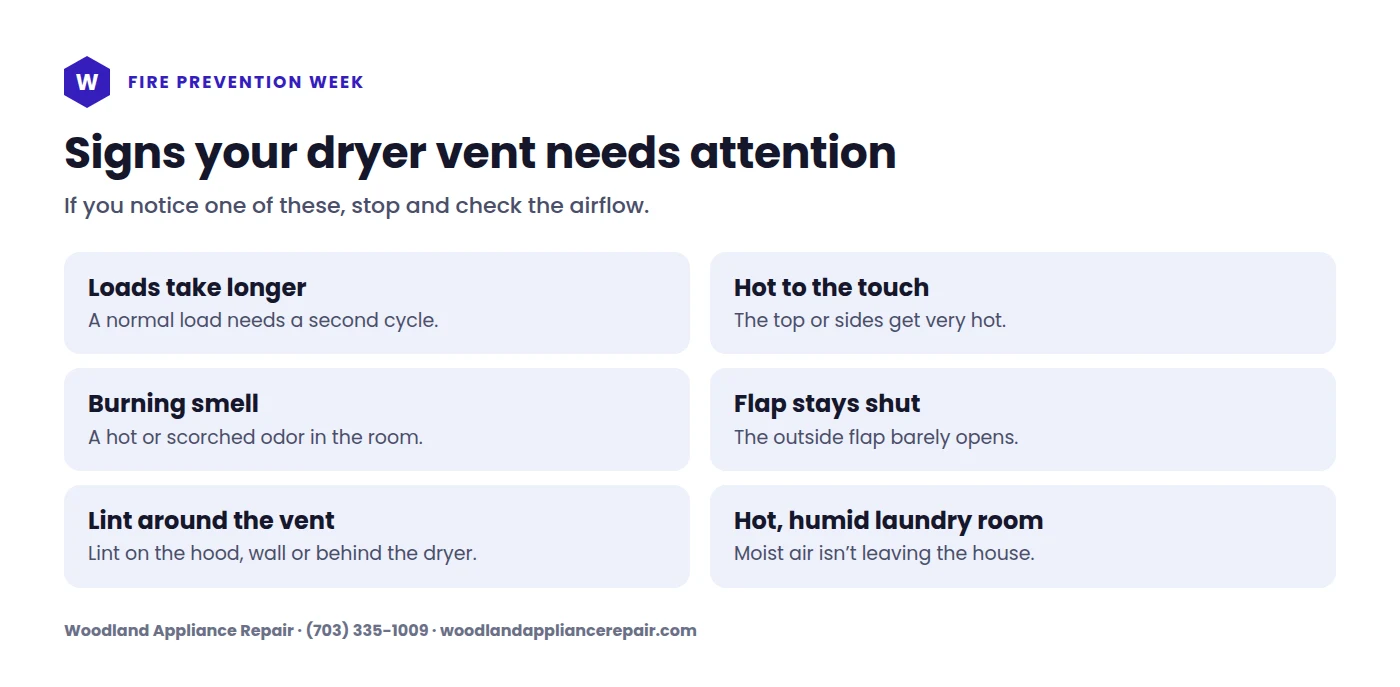
- Clothes take longer to dry. A towel load that needs two cycles is the earliest and most common sign.
- The dryer is hot to the touch. The top and sides get warm in normal use. Too hot to keep your hand on means trouble.
- You smell burning. Stop the dryer at once.
- The outside flap doesn’t open. Air with nowhere to go means heat stays inside.
How to check your dryer vent airflow
This two-minute check is the most useful dryer fire prevention test you can do yourself.
- Clean the lint screen, then start a timed dry cycle on high heat with no clothes in it.
- Go outside and find the vent hood. The flap should be wide open.
- Hold your hand a few inches from the opening. You should feel a strong, warm stream of air.
- If the flap barely lifts or the air is weak, the duct is restricted somewhere along the run.
- Back inside, pull the dryer out a little and look for a crushed or kinked duct behind it.
Weak airflow with a clear transition duct means the blockage is farther along the run, often at the hood or a bend inside the wall. That’s the point to book a dryer vent cleaning.
If you smell burning or see smoke, stop the dryer and unplug it, or turn off its breaker. Close the door to the laundry room. If there’s flame or the smoke keeps coming, get everyone out and call 911 from outside. Don’t open the dryer door if you think there’s a fire inside.
From our technician
“Northern Virginia townhouses are where you see some wild dryer-vent setups. The laundry is on the second or third floor and the vent runs 20 or 30 feet, sometimes all the way to the roof. I’ve pulled packed lint and bird nesting out of vents with several turns and almost no airflow.
If someone tells me the dryer suddenly needs two or three cycles, I check airflow before I start throwing dryer parts at it.”
Nick, Senior Technician, EPA-certified, experience since 2008
When to call a technician
- The dryer shuts off on its own partway through a cycle
- It runs but stays cold, or a part has already been replaced for overheating
- You smell gas near a gas dryer
- The drum, belt or motor makes new grinding or squealing noises
- The vent and duct are clear and the dryer still runs hot or slow
Dryer repair in Northern Virginia
We repair dryers and clean dryer vents, from the duct behind the dryer to the hood outside. Woodland handles dryer repair across Prince William, Fairfax, Loudoun and Fauquier counties, plus Arlington and Alexandria. We’re based in Woodbridge, so Woodbridge, Manassas, Dumfries and Lorton are usually same-day calls, and we’re in Fairfax, Centreville, Springfield, Arlington and Alexandria every week. See our dryer repair page or call (703) 335-1009.
What a visit costs with Woodland
Our dryer repair visit is a $69 diagnostic, waived with the repair, with a flat quote before any work.
$69
Service call, waived completely when you go ahead with the repair
$99
Heating or AC tune-up to catch problems before the season turns
90 days
Warranty on parts and labor
Same price any day we’re open, including evenings and Saturdays. There’s no travel fee.
Frequently asked questions
When is Fire Prevention Week 2026?
Fire Prevention Week 2026 runs October 4 to 10, according to the National Fire Protection Association. It’s a good week to start a dryer fire prevention routine, since home dryer fires are more common in fall and winter.
How often should I have my dryer vent cleaned?
No single schedule fits every home. Long vent runs, big families and pets fill a vent faster, and slower drying or a weak outside flap means it’s time. Woodland cleans the full run to the outside and checks the hood and flap.
Is foil dryer duct safe?
Thin foil and vinyl duct crush easily and trap lint, so they’re poor choices. Rigid or semi-rigid metal duct is the better option for dryer fire prevention. Follow your dryer’s installation guide for the maximum length and number of bends.
Does Woodland do dryer vent cleaning?
Yes. We clean dryer vents across Northern Virginia, from the duct behind the dryer to the hood outside, and check that the flap opens. Call (703) 335-1009 or book online for a quote.
Is it safe to leave the dryer running when I leave the house?
It’s safer not to. If something goes wrong, nobody is there to notice the smell or smoke early. Run loads when someone is home and awake.
What is the most important dryer fire prevention habit?
Cleaning the lint screen before every load is the simplest and most effective habit. Pair it with regular vent cleaning and a quick check that the outside flap opens. Together they keep lint from building up and air moving.
Need a repair? We can usually be there today.
Locally owned and operated in Woodbridge. Licensed & insured, EPA 608 certified, with 15+ years fixing appliances, heating and cooling across Northern Virginia. $69 service call, free with the repair.