Repair guides and original data from the technicians at Woodland Appliance Repair. We answer the questions Northern Virginia homeowners ask us most about furnaces, heat pumps, dryers and refrigerators, with checks you can try yourself and clear signs it is time to call a pro.
Browse by topic: Heating & furnaces · Washers & dryers · Home maintenance · Data experiments
-
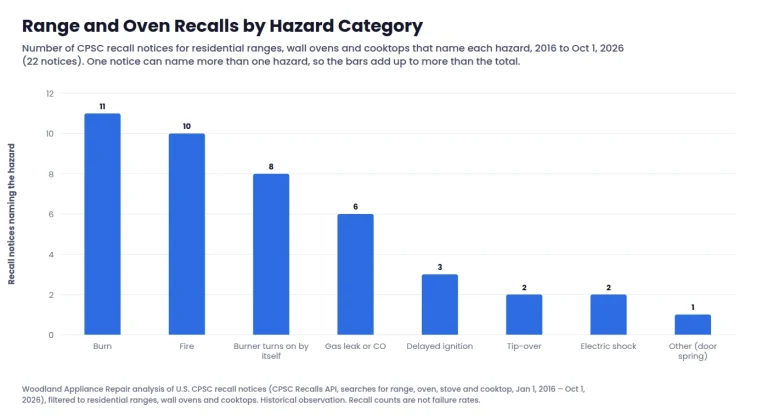
We sorted every residential range, wall oven and cooktop recall CPSC announced from 2016 to October 2026 by hazard, fuel and year. Here’s what keeps showing up, and how to check your own model in a few minutes.
-
A burner that clicks and won’t catch is usually wet, dirty or sitting crooked. Here’s what to check in the order a technician would, and where the safe DIY part ends.
-
Thanksgiving is November 26. Test your oven now, with time to spare for a repair, using five simple checks: preheat, bake, broil, cooktop and door.
-
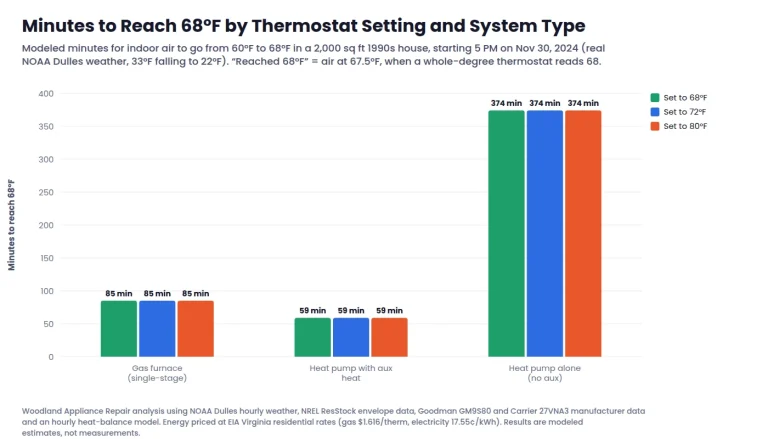
We modeled a cold Northern Virginia house warming from 60°F to 68°F with the thermostat at 68, 72 and 80. For a furnace, 80 changed nothing but the bill. For a heat pump, the answer has a twist.
-
Loads that take two cycles, a hot laundry room or a burning smell usually point to a clogged vent. Here are the seven signs to watch for, and what you can safely check yourself.
-
Use the clock change on November 1 as your reminder to test every alarm and look over your heating system. Plus the steps to take, in order, if your CO alarm sounds.
-
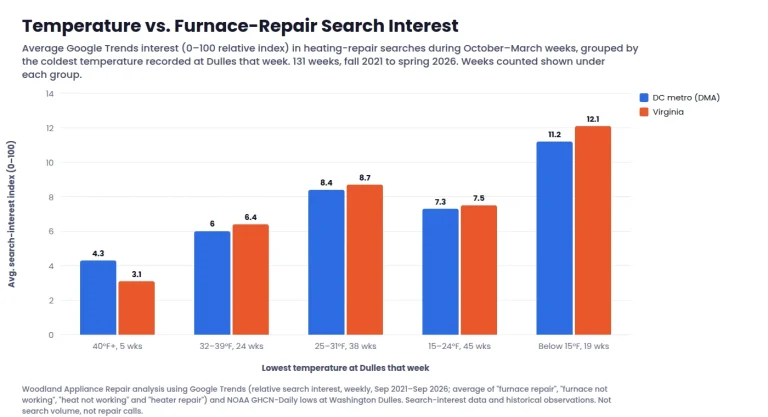
We lined up five years of Google Trends search interest for heating-repair phrases with NOAA weather at Dulles. The link to cold weather is real but weak. Here’s what the data does and doesn’t show.
-
Some furnace sounds are normal and some mean shut it off now. Match the sound you hear to its likely cause, what you can check yourself, and when to call.
-
The parts that fail in the first cold week usually show warning signs in October. Here’s what our $99 heating tune-up checks, and the early-season repairs it helps you avoid.
-
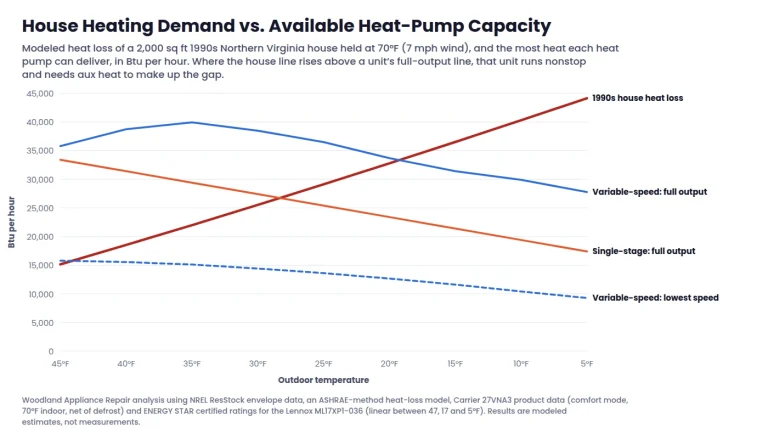
We modeled a 1990s Northern Virginia house against two real heat pumps from 45°F down to 5°F. A variable-speed heat pump runs almost nonstop most of the winter, and that’s by design.